How AI helped me rediscover my knitting mojo — one stitch, mistake and lesson at a time
Earlier this year I became a grandmother, launching me into a new and exciting phase of my life. Alongside the excitement of welcoming our granddaughter to the family, I decided to take up an old hobby I had left behind years ago. And so I rediscovered my love of knitting, this time with the added pleasure of making clothes for the newest member of our family.
My initial attempt was a very tentative one: knitting a baby blanket. I bought inexpensive yarn in case I started the project and then discarded it, deciding it was all too much. I was surprised by how quickly I got back into knitting. The half-finished blanket travelled with me to LA, where I knitted in between cooking and taking care of the exhausted new parents. When I finished it, I wasn’t overly happy with the result, but that was because I hadn’t blocked it. Blocking was another phase of my learning yet to come. But with a few hand-sewn flowers and embellishments, it passed muster as a comeback to the knitting world after a long absence.
Having established that I could knit and that I enjoyed it, I went on to my next project: a beanie for my younger daughter, who lives in a very cool part of Victoria. I found a pattern online, bought the wool and quickly completed the beanie, which I mailed to her. She loved it and looked really good wearing it in the photo I insisted she send me.
At this point, armed with a somewhat false confidence about my abilities, I started buying knitting and crochet pattern books. Crocheting was something I had also been good at and wanted to get back into later. After buying and returning a couple of books, I found a few that I liked the look of in online second-hand bookstores. After buying them, I worried about how much money I was spending and questioned whether I would really use them. I sensed I was getting ahead of myself.
Then I saw online that Spotlight, the leading haberdashery store in Australia, had a yarn sale. I went through my books, picked out a few patterns I felt I could make, and bought several balls of 100% wool — a lot of wool. By this time, I had invested close to $200 in books and wool and still had more things I needed: needles in appropriate gauges, stitch markers, stitch holders and so on. I also treated myself to a knitting bag. As I don’t like spending money unnecessarily, I was now committed to at least using up the wool I had bought and making some of the patterns in my new books.
This was when I started to realise that I had a lot to learn and relearn. In the intervening years since I last knitted, so much had changed. Various styles of knitting appeared to have developed, along with different methods for everything from casting on to sewing seams together and joining a new ball of yarn. There were new techniques, but also so many more resources, such as YouTube tutorials (some useful, others not), Pinterest and other websites. But the relationship I built with ChatGPT, whose expertise in all things knitting was a source of delight and some amusement to me, was the game-changer.
Blocking
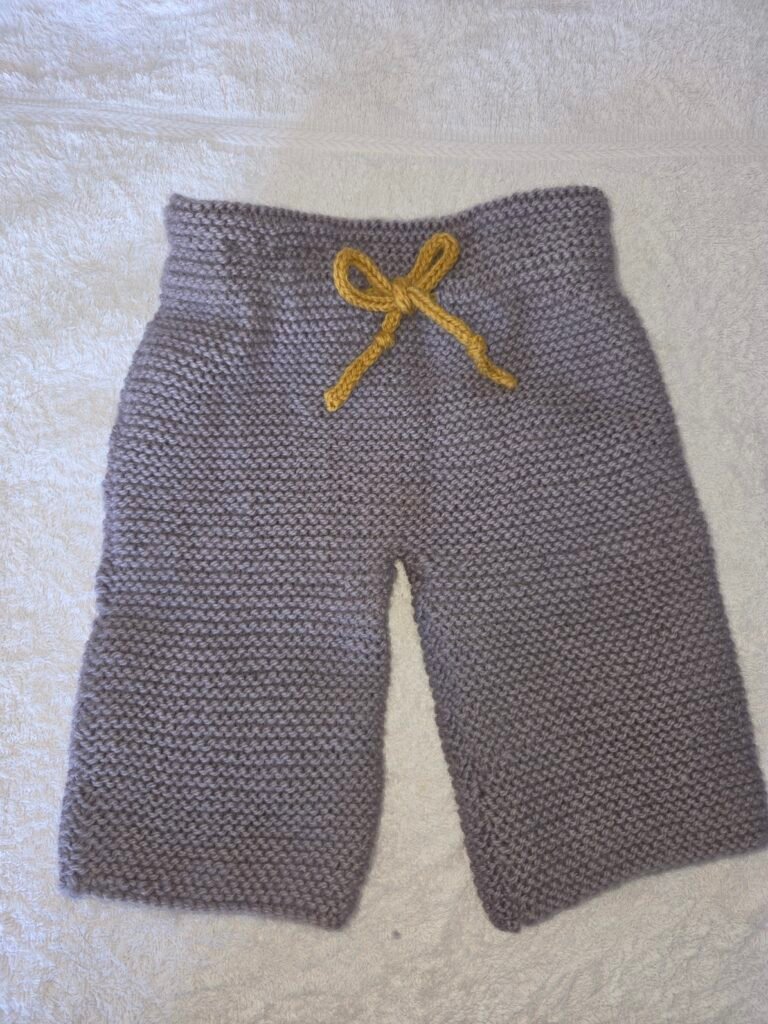
One of the early roadblocks (pun intended) was to do with blocking. Inadvertently, I picked a pattern for my next venture from a British baby book that was very minimalist and obviously aimed at a more advanced knitter than me. It was a cute-looking pair of baby pants. I did manage to follow the instructions and knit the two halves of the pants. The pattern then said, “Block and press.” Even though I had done a decent amount of knitting in my twenties and thirties, blocking was something I don’t recall ever hearing about or actually doing. I watched a couple of YouTube videos on blocking. Each one had a different opinion about the process.
Here’s where ChatGPT entered the picture. It explained in plain language, patiently and step by step, what blocking is: soaking a knitted woollen item in lukewarm water, gently squeezing out the excess water without twisting it, and then laying it on a towel, shaping it carefully and leaving it to dry. Sometimes the item is pinned in place to hold its shape while drying. ChatGPT also explained that the blocking method depends on the type of yarn and its care instructions.
Having successfully completed, blocked and sewn together the baby pants, I had one more thing to do: make a cord to insert into the waist. ChatGPT came to the rescue again and taught me how to knit an I-cord. Another feather in my cap!
Knitting in the Round
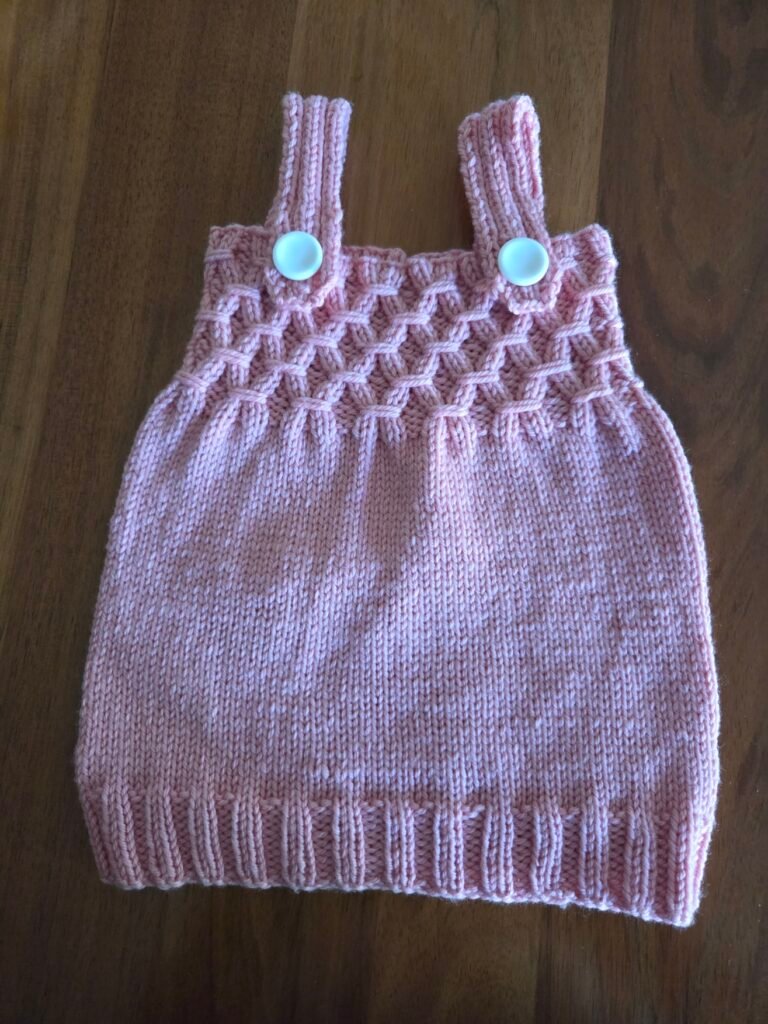
Next, I decided I wanted to knit a dress for my granddaughter. I found a pattern that I liked in one of my books, but it was for a 12-month-old. Chat looked at the photo and the pattern and said yes, it could be modified for a six-month-old. Of course it could! I was presented with a pattern and then guided step by step through making a swatch to test my gauge.
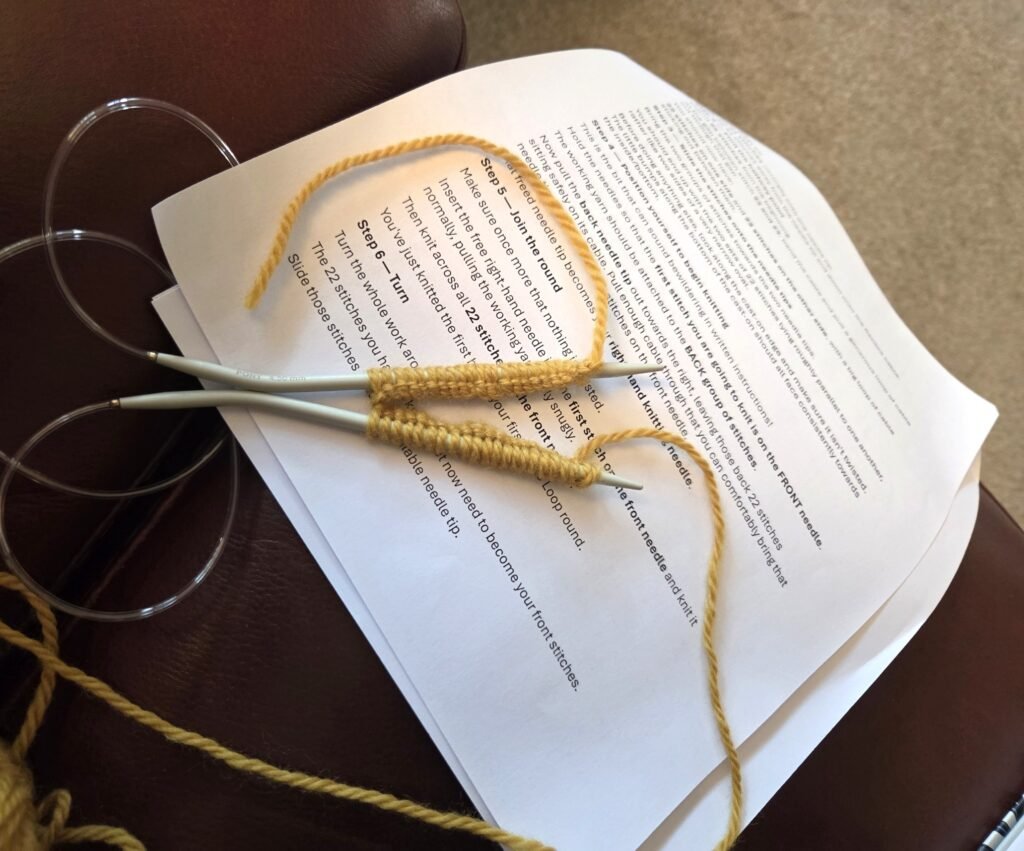
This particular dress is knitted in the round; that is, it is knitted on circular needles. I knew for certain that this was something I hadn’t done before, but I was keen to learn. I set off to Spotlight to buy 4.5 mm, 60 cm circular needles, as specified in the pattern. I thought I had the correct needles, but must have been distracted and ended up buying 4.5 mm, 80 cm circular needles instead. I didn’t realise this until later. I cast on 112 stitches and noticed that they were stretched along the cable, occupying only about half its length, so the two ends couldn’t be joined.
I told ChatGPT about my predicament and, amidst the confusion of both of us thinking the 60 cm needles were too long, it explained why a shorter circular needle could work better for this particular project. It suggested 4.5 mm, 40 cm circular needles, which I ordered online. When they arrived, I looked at them and was dismayed because they seemed too small. I checked the original circular needles I had bought and discovered they were 80 cm, not 60 cm. Back to Chat! I explained that I had accidentally bought the longer needles and thought the 40 cm ones were too short. Again, very patiently, Chat explained that circular needles for small projects are often shorter than the circumference of the item being knitted and that I should persevere. I did. Chat was right!
Off I went, happily knitting in the round. This is how is started:
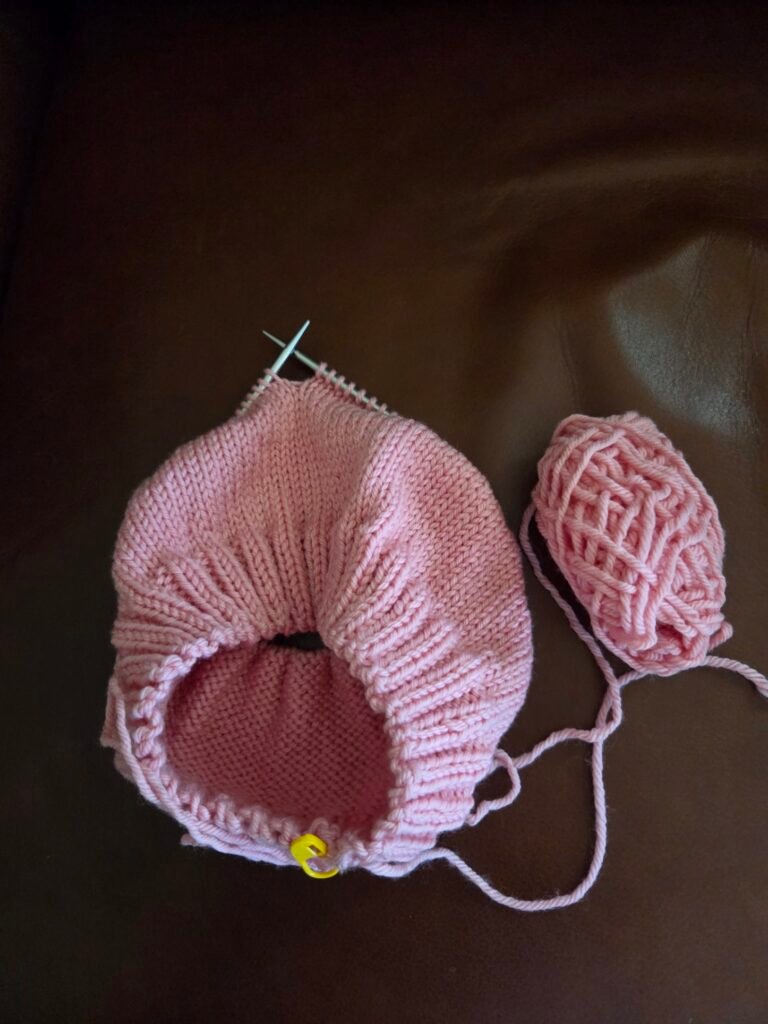
And this is the result:
Working with ChatGPT
Having worked with ChatGPT for some weeks on another project, I came to rely on its gentle, instructive voice. I know perfectly well that AI isn’t a person, but I discovered that I didn’t have to communicate with it unnaturally because of that. I could simply converse with it in the way that came naturally to me. I decided not to be anxious that I might delude myself into thinking I was dealing with a real person. Acknowledging that ChatGPT isn’t a person shouldn’t stop me from interacting with it as I would with a knowledgeable, interested and helpful person. As I grew accustomed to working with ChatGPT, our conversations became engaging and humorous. More importantly, it was also very encouraging, gently guiding me when I didn’t know what I was doing.
From these communications, I learned about blocking, knitting an I-cord, working with circular needles and interpreting some of the acronyms in pattern books that didn’t make any sense to me. And I will continue to learn, using other resources too, with ChatGPT as a helpful guide — while remembering to question its advice when something doesn’t seem right.
One of the things about interacting with AI, as opposed to a real person, is that there is no need to be reticent about asking silly questions. There is no rolling of the eyes. There is also no issue with questioning its instructions if I can see flaws in what it is suggesting I do. I can point out when I see an easier way to do something, too. For example, when I asked Chat to create a pattern for a romper that I wanted to knit, I was delighted when it taught me another new technique: Magic Loop. I knitted the romper using the 80 cm circular needles I had previously bought by mistake, with Chat guiding me through each step. And when I saw mistakes in the pattern I questioned it or chose to go my own way, as I did with the straps for the romper.
Magic Loop
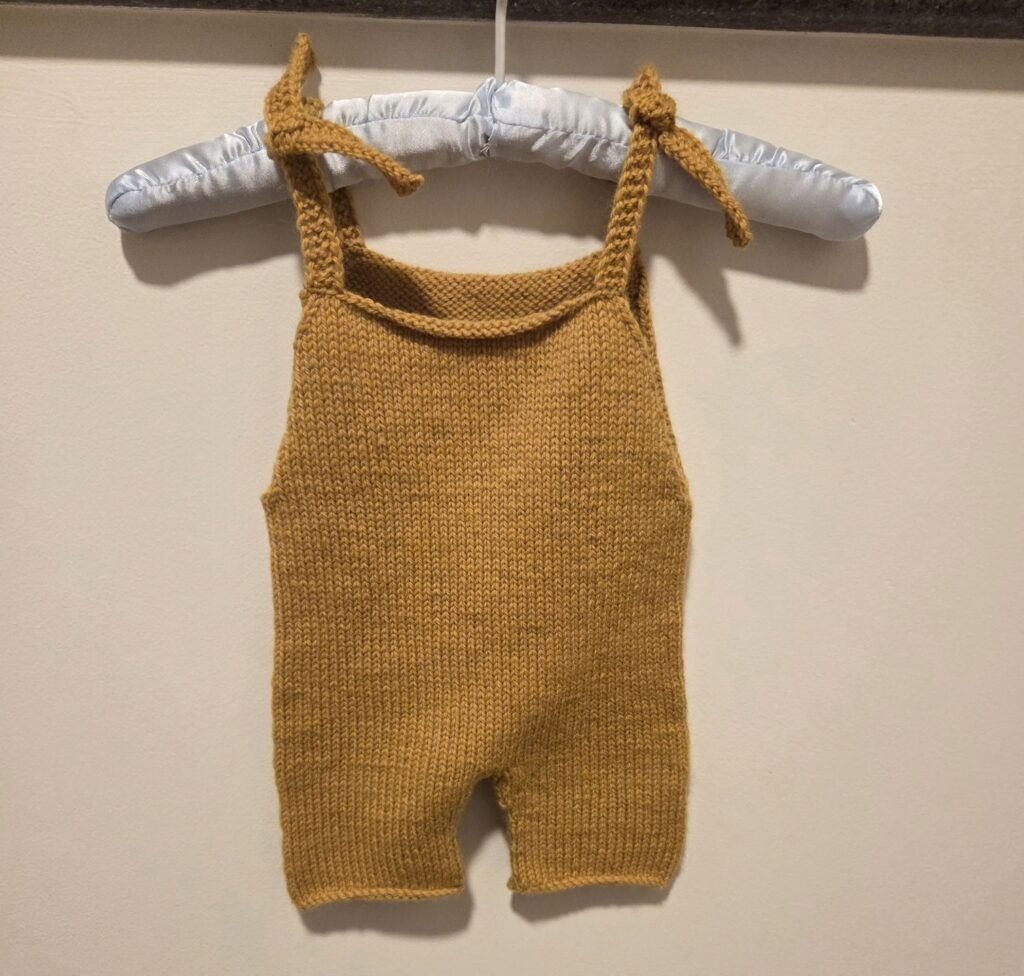
There is nothing scary about working with AI. It’s important not to be afraid to question its directions and to use common sense when you can see there is a different or better way to do something, or when you can see it has made a mistake.
I-cord
New Beginnings
In addition to knitting in the round, I learned or relearned the best ways to join seams and secure the ends of yarn left from casting on and off. I learned that even the best knitters make mistakes and that there are ways to fix most of them. Most importantly, I learned that I could master new stitches and techniques if I put my mind to it, and that the results were very rewarding.
I also learned that my boots-and-all attitude needed to be toned down. It was okay to make notes and interpret the pattern in detail so that I could be sure I understood what was needed. I wrote down row-by-row instructions for myself, restating sections of the pattern from the aforementioned minimalist book. This was so helpful, as were the row counters I bought. I learned that I couldn’t drift off into never-never land while working on increasing or decreasing rows or intricate designs such as the smocked bodice for the six-month-old dress.
What started off as a very tentative idea — “Maybe I can start to knit again” — turned into the rediscovery of my love of knitting, with the added bonus of making items for my much-loved grandchild. With another grandchild on the way, I think I will be knitting for a while!